Bulgaria Euro Adoption Opens New Chapter for Banking and European Finance
- Founder & Editor, EuroBankingNews
- 20. Juli
- 2 Min. Lesezeit
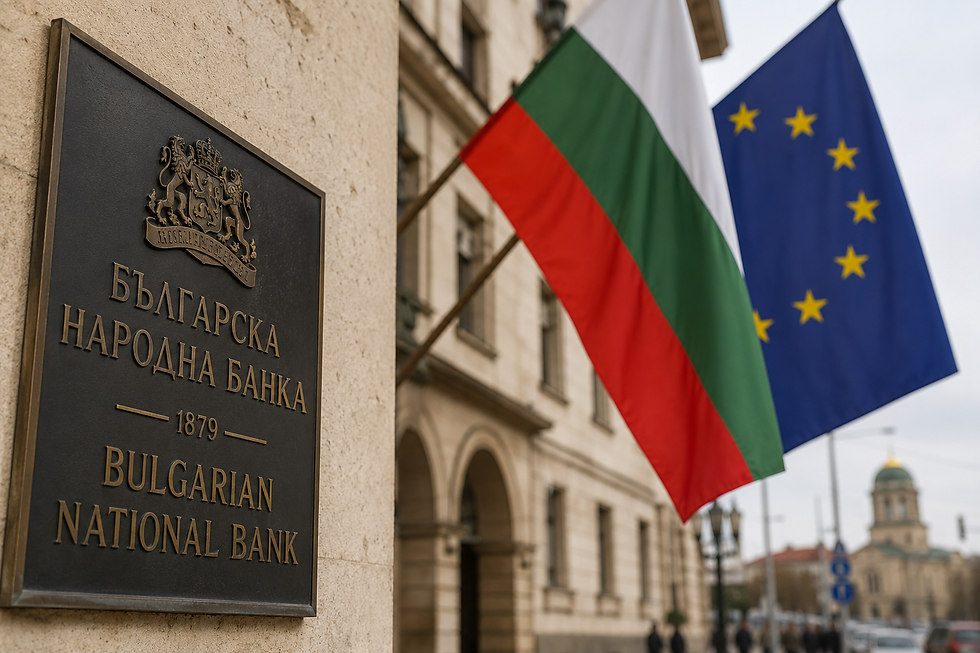
Bulgaria’s euro adoption has entered a new phase, with the country becoming the 21st member of the euro area on January 1, 2026. The move represents more than a currency change for Bulgaria: it places the country directly inside the Eurosystem and creates new opportunities for banks, businesses and investors across the economy.
The transition follows years of preparation. Bulgaria’s lev had been pegged to the euro for decades, reducing exchange-rate uncertainty ahead of the changeover. The conversion rate was fixed at 1.95583 lev per euro, while the Bulgarian National Bank became part of the Eurosystem following the country’s entry into the single currency area.
The scale of the banking preparation underlines the importance of the transition. According to World Finance, Bulgarian banks invested more than €200 million in technology, logistics, training and organisational systems ahead of the switch. Payment systems and ATM infrastructure were adapted rapidly, allowing euro transactions to begin from the first hours of 2026.
For the financial sector, Bulgaria euro adoption could gradually improve access to European liquidity and monetary-policy mechanisms. Bulgarian banks now operate within the wider Eurosystem framework, while the country’s integration into European financial structures may help reduce certain currency-related risks for companies and investors.
The change could also influence borrowing conditions. Greater access to European financial markets and instruments may support more competitive financing for businesses and households over time. However, the impact will depend on broader factors including interest rates, credit demand, productivity and the strength of Bulgaria’s domestic economy.
For investors, Bulgaria euro adoption strengthens the country’s institutional integration with the European financial system. It may improve transparency for cross-border investors and reduce the need for currency conversion when conducting business with euro-area partners.
The transition also carries political and social risks. Bulgaria has faced public concerns over possible price increases and the loss of monetary sovereignty. The experience of other euro adopters suggests that the long-term economic effects depend heavily on domestic competitiveness, fiscal discipline and the ability to use the benefits of deeper financial integration effectively.
The country’s euro entry also has wider regional significance. Bulgaria is one of the EU’s fastest-growing economies and a strategic link between Central Europe, the Balkans and the Black Sea region. Its adoption of the euro could strengthen its attractiveness to international investors seeking access to the broader European market.
For the banking sector, the next stage will be less about the technical currency conversion and more about using euro-area membership to improve financing, investment and resilience.
Bulgaria euro adoption therefore marks the beginning of a longer economic process. The immediate change is visible in banknotes and payment systems, but the more important effects will emerge gradually through capital markets, credit conditions, investment flows and Bulgaria’s deeper integration into the European economy.
Source: World Finance; European Central Bank.


Kommentare