EU Budget 2028–2034: Greece Calls for Migration Solutions to Be EU-Funded
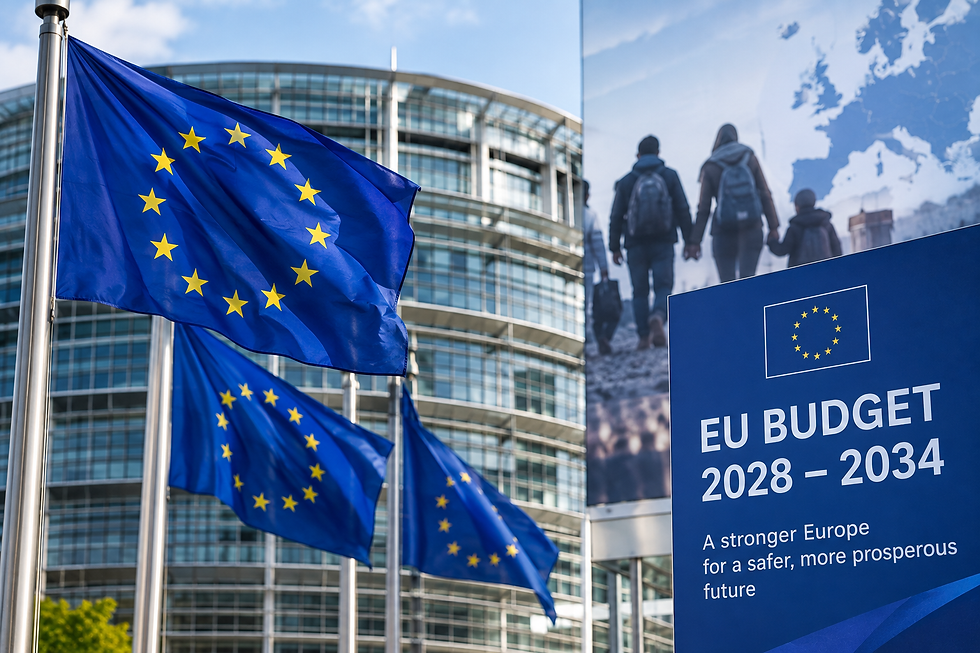
Greece is calling for the European Union's next long-term budget to provide financial resources for new solutions to Europe's migration challenges, including proposed return hubs outside the EU.
Greek Deputy Foreign Minister Tasos Chatzivasileiou said the EU would need to identify adequate funding if member states decide to implement new migration arrangements. His comments come as negotiations over the EU budget 2028–2034 intensify and governments debate how the bloc should allocate almost €2 trillion in planned spending.
For European financial markets and public finances, the debate is significant because migration is competing for resources with defence, competitiveness, infrastructure, climate policy, agriculture and cohesion spending.
Greece Wants EU Funding for New Migration Measures
Speaking to Euronews' Europe Today on September 22, Chatzivasileiou argued that innovative migration measures require European-level financing.
"If we decide to implement any innovative ideas" for migration, Europe must find the necessary resources, he said, adding that the next EU long-term budget could provide part of the solution.
Greece is working with Austria, Denmark, Germany and the Netherlands on plans for return hubs in third countries for people who do not have the right to remain in the EU. The five countries are expected to discuss the issue again in Munich this weekend.
The proposal comes as European governments seek to increase the effectiveness of return procedures while also negotiating the financial framework that will determine EU spending from 2028.
EU Rules Already Allow Return Hubs
The financial discussion follows an agreement reached by the Council of the EU and the European Parliament in June 2026 on new rules concerning the return of third-country nationals who are illegally staying in the EU.
The agreement allows member states to establish return hubs in third countries. These facilities could serve either as destinations for people being returned or as transfer centres before onward return to another country.
The rules require agreements with third countries to respect international human rights standards and international law, including the principle of non-refoulement. Unaccompanied minors are excluded from such arrangements.
Under the framework described by Euronews, individual EU countries would be responsible for financing such return hubs. Greece and its partner countries are now arguing that the EU's next budget could also contribute to the costs.
That distinction is important for European public finances. Moving part of the cost from national budgets to the EU level would make migration management a more explicitly shared fiscal responsibility.
Almost €2 Trillion EU Budget Under Negotiation
The European Commission has proposed a long-term EU budget of almost €2 trillion for 2028–2034, equivalent to around 1.26% of the EU's average gross national income over the period.
The proposal represents a major restructuring of EU spending and places greater emphasis on security, defence, competitiveness, migration, energy and climate resilience while maintaining traditional priorities such as agriculture and economic and territorial cohesion.
Migration and border management are already included in the proposed framework. The EU says funding in this area would increase and could support external-border management, border guards, migration management and implementation of the EU Pact on Migration and Asylum.
The Council has also agreed a partial negotiating position for migration, border management, visas and internal security. Under the proposed structure, member states would receive funding through national and regional partnership plans rather than several separate programmes.
Budget Pressure Is Growing
The debate over migration funding is taking place against a wider dispute about the size of the next EU budget.
Germany, Denmark, Finland, the Netherlands and Austria said in September that the Commission's €2 trillion proposal should be reduced by several hundred billion euros. The five countries argued that EU spending needs to leave more room for common investment in security, defence, competitiveness, innovation and tackling irregular migration.
This creates a difficult allocation problem.
The EU is simultaneously facing higher demands for defence investment, support for Ukraine, industrial competitiveness, energy security, infrastructure and the green transition. Migration management adds another area where governments are seeking more common European resources.
For financial markets, the question is therefore not only how much the EU eventually spends, but also how the spending is financed and distributed between EU institutions and national governments.
What EU Funding Could Mean for Member States
If migration-related infrastructure and return arrangements receive greater EU-level funding, national governments could face lower direct budgetary costs for projects that are considered a common European priority.
At the same time, expanding EU-level programmes could increase pressure on the overall budget envelope or require resources to be shifted away from other programmes.
This is particularly relevant for net contributors and net beneficiaries of the EU budget. Countries contributing more to the common budget are generally more focused on controlling the overall size of EU spending, while countries receiving larger allocations often have an interest in preserving funding for cohesion, agriculture and investment.
The September budget debate already reflects this tension. EU governments are aiming to reach agreement before the end of 2026, with discussions expected at European Council meetings in October, November and December.
Greece's Position Fits Into a Broader EU Fiscal Debate
Greece's proposal should therefore be viewed within the wider negotiations over the EU's financial priorities rather than as a standalone migration initiative.
Athens is seeking European resources for measures that it argues address a common EU challenge. Other member states, meanwhile, are assessing how much additional spending they are willing to finance through the EU budget.
The outcome will affect the allocation of European funds from 2028 onwards and could influence national fiscal planning, infrastructure investment and the distribution of EU financial support.
For banks, investors and businesses operating across Europe, the final Multiannual Financial Framework will be an important signal about where the EU intends to direct public investment during the next seven-year period.
Outlook
The EU budget negotiations will continue through the final months of 2026. Migration funding, return infrastructure and border management are likely to remain part of the broader discussion over how Europe balances security and migration priorities with competitiveness, defence, cohesion and investment.
Greece's call for EU financing adds another dimension to those negotiations: whether new migration arrangements should remain primarily a national financial responsibility or become more explicitly part of the European budget.
Source: Euronews, Council of the European Union, Reuters. Date: September 22, 2026


Kommentare